
‘JAŸ-Z in 8’ Finale: 5 Things We Learned From Episodes 7 & 8

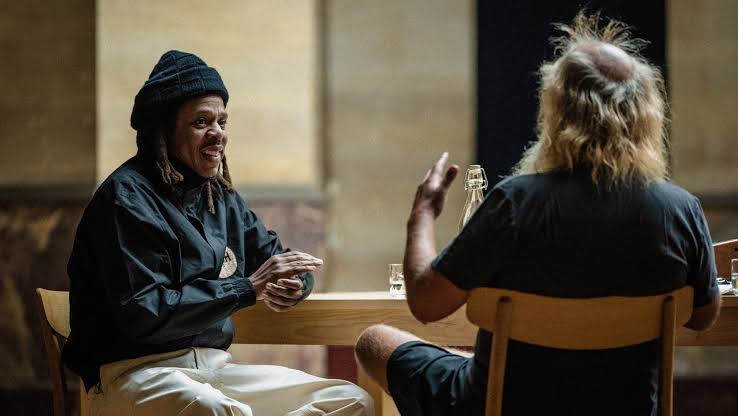
The final two episodes of JAŸ-Z in 8 premiered on October 9, bringing HBO’s eight-part documentary series to a close with an extended conversation between Jay-Z and longtime friend and producer Rick Rubin. The concluding chapters revisit key records from the rapper’s later career, examining the personal experiences, creative decisions and cultural issues reflected in his music.
Directed by Rubin, the series features Jay-Z discussing his catalogue track by track, using the stories behind individual songs to explore his development as a songwriter and recording artist. Episodes seven and eight continue that format, moving from commercially successful releases to songs that address race, family, power and the legacy of hip-hop.

Episode seven examines records including “Hard Knock Life (Ghetto Anthem)” and “Empire State of Mind,” featuring Alicia Keys, alongside projects such as The Blueprint 3 and Streets Is Watching. Jay-Z also reflects on changes in his creative approach, including his growing interest in visual art and how that interest influenced the presentation of his music and album artwork.
The finale also revisits the long-running rivalry between Jay-Z and Nas. Jay-Z traces the tension to earlier experiences and perceived lyrical shots, explaining how competition developed into one of hip-hop’s most prominent feuds. He describes the conflict as personal at times but also rooted in artistic rivalry, noting that the two rappers eventually moved beyond it and developed a friendship.
Another major subject in the closing episodes is Jay-Z’s creative relationship with Beyoncé. During his conversation with Rubin, he contrasts his comparatively direct recording approach with Beyoncé’s layered process, which often involves building vocals, harmonies and melodies. Their collaborations, including music released together as The Carters, have formed a significant part of both artists’ careers.
Episode eight turns toward Jay-Z’s more politically charged material, including “The Story of O.J.” and “No Church in the Wild.” The discussion explores the themes behind these songs, including racial identity, power structures and the social expectations surrounding Black artists. The episode also examines “Family Feud” and “Legacy,” connecting questions of family responsibility and generational change to the rapper’s reflections on his own life.
The series’ final chapter features songs including “New York (Concept de Paris),” “The Story of O.J.,” “No Church in the Wild,” “Family Feud” and “Legacy.” Through the tracks, Jay-Z and Rubin consider how his music has changed alongside his personal circumstances, business interests and position within the entertainment industry.
JAŸ-Z in 8 premiered on September 18, with two episodes released each Friday through October 9. The project was directed by Rubin, marking his directorial debut in documentary filmmaking, and executive produced by Jay-Z, Rubin and Academy Award winner Daniel Kaluuya. Producers Leila Mattimore and David Rohde also worked on the series, which was produced by Tetragrammaton for HBO Documentary Films.
The documentary arrived during a celebratory period for Jay-Z, whose career spans more than three decades since the release of his debut album, Reasonable Doubt, in 1996. The series revisits music from across that career, including songs that helped establish his reputation as a lyricist and later releases that reflected his experiences as an artist, entrepreneur and father. All eight episodes are available to stream on HBO Max.